This site offers wellness guidance, not medical care. Always consult your doctor or midwife before beginning any exercise programme.
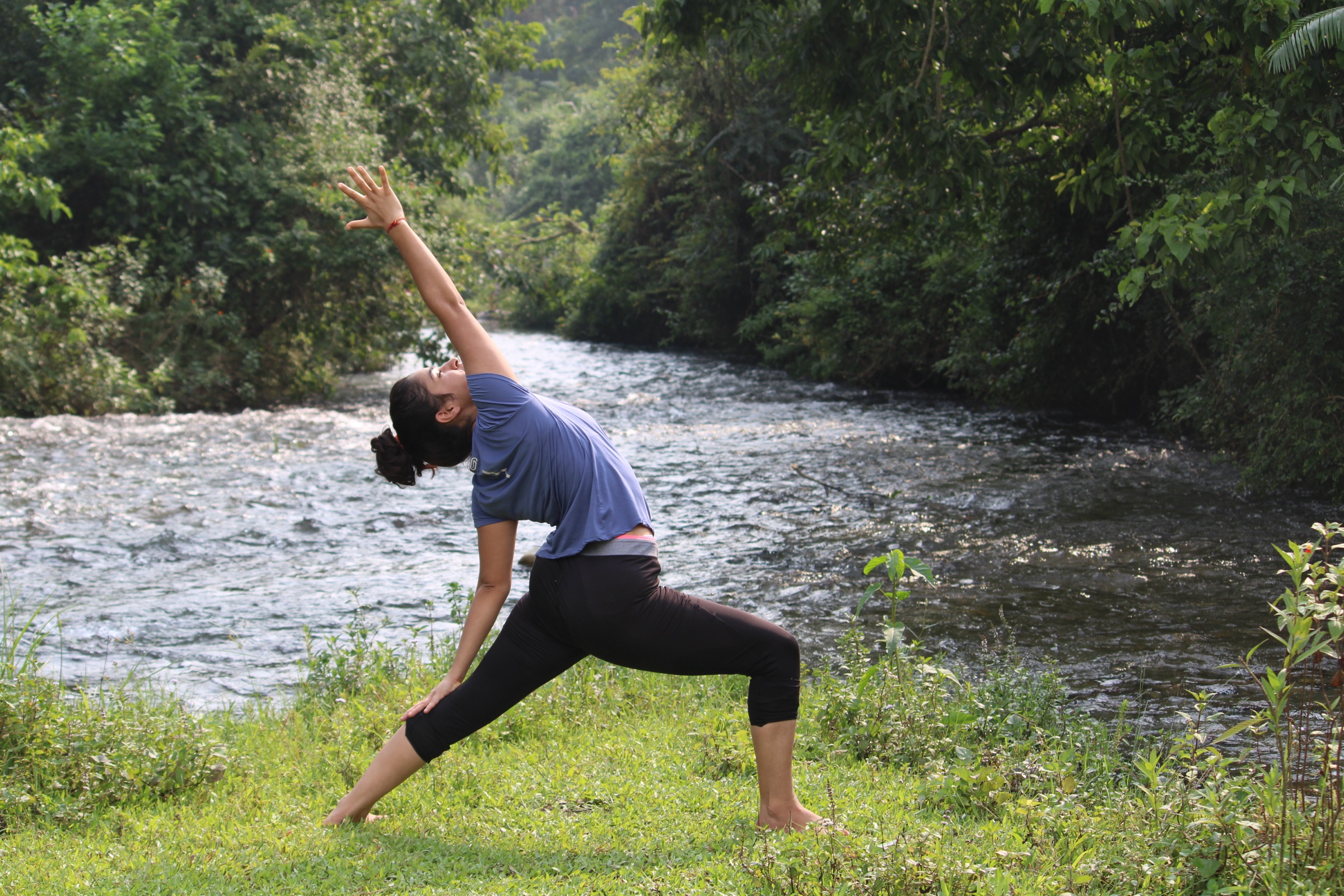
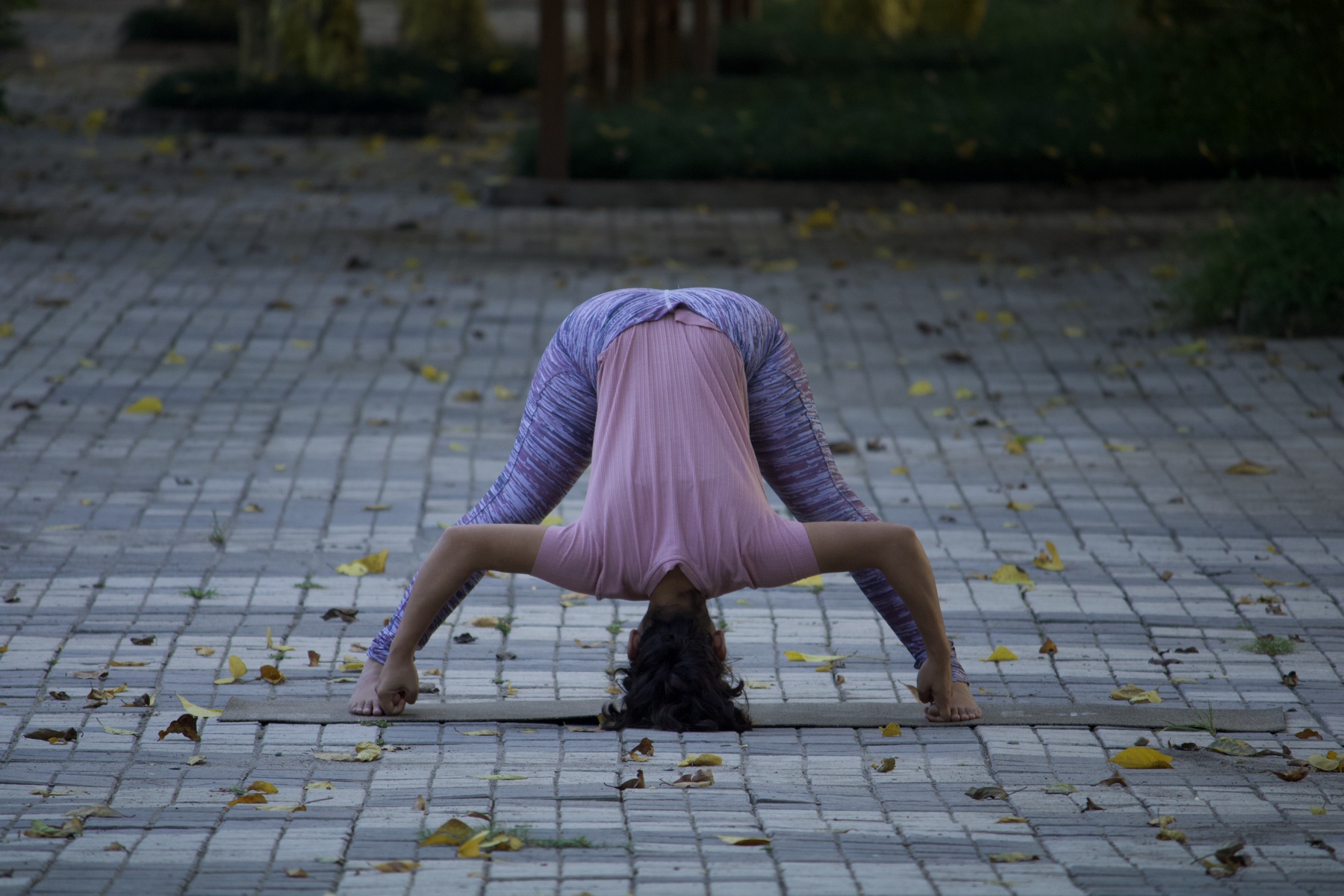
A practitioner in a calm, grounded yoga stretch beside a quiet river

Online prenatal & postnatal yoga · India

Safe, compassionate online yoga for pregnancy, birth and postpartum recovery.

Trimester-based programs, live classes in Indian Standard Time, and a teacher who understands the body before, during and after birth — from your home, in English or Hindi.

2,400+students supported
30+cities across India & abroad
9 yrsprenatal & postnatal teaching
5 AM–9 PMlive class window, IST

How it works

From questionnaire to your first class, in four gentle steps.

01

Health & pregnancy questionnaire

A short, confidential screening covering your trimester, birth history and any medical guidance you've received.

02

Select a suitable program

We recommend a starting stage — or you choose freely from prenatal, postnatal and mother-and-baby tracks.

03

Attend live or recorded classes

Join a live session in your local time slot, or practise on demand at whatever hour suits your body.

04

Modifications & ongoing support

Every pose comes with a modification, and WhatsApp support is a message away between classes.

Each program page states who it's for, session duration and frequency, intensity, required equipment, and when to pause and seek medical advice.

Prenatal offerings

  • Garbh Sanskar*

    Garbh Samvad & baby bonding; mantra, shloka & affirmations; meditation & visualisation; music & mindful practices.

  • Pregnancy-safe Asanas

    Mobility, strength & flexibility; pelvic & hip opening; posture & body awareness.

  • Pranayama & Yoga Nidra

    Gentle pregnancy-safe pranayama; breath awareness; deep relaxation; Yoga Nidra for rest & mental well-being.

  • Labour & Birth Preparation

    Birthing ball practices; pelvic floor awareness; labour positions & movements; breathing techniques for labour; relaxation & comfort techniques; birth preparation practices.

*Garbh Sanskar is a traditional Indian practice of mindful, intentional bonding with your unborn baby through sound, routine and reflection — a cultural wellness practice, not a medical or diagnostic one.

Postnatal tracks

  • 01Early postpartum rest & breath awareness
  • 02Vaginal-birth recovery
  • 03Caesarean recovery
  • 04Pelvic-floor awareness & diastasis-conscious movement
  • 05Gentle core reconnection & strength rebuilding
  • 06Yoga with baby
  • 07Return-to-practice program
  • 086-week, 3-month & 6-month progression plans

Recovery timelines vary by birth type, medical history, symptoms and your healthcare provider's advice — programs are a guide, never a fixed schedule.

  • Mandatory health-screening form before enrolment: weeks pregnant, due date, birth history, current conditions and any doctor or physiotherapist restrictions.
  • Confirmation that you've consulted your doctor or qualified healthcare professional where appropriate.
  • A dedicated Safety, Contraindications & Modifications page — never buried in the footer.
  • Private pre-class health information shared with your instructor only.
  • Camera-off option, consent required before any recording, and a private way to report discomfort.
  • Class size limits so every practitioner gets real, personalised supervision.
  • Clear referral process to a doctor, physiotherapist, psychologist or lactation consultant.

Stop your practice & seek medical advice if you experience

  • Vaginal bleeding
  • Fluid leakage
  • Persistent dizziness
  • Chest pain
  • Severe shortness of breath
  • Calf pain or swelling
  • Painful, regular contractions
  • Reduced fetal movement
  • Sudden severe headache or visual disturbance

Yoga here is supportive wellness — never a replacement for obstetric or medical care.

We will never claim: a diagnosis, medical clearance, a guaranteed vaginal/normal delivery, C-section prevention, a treatment or cure, guaranteed recovery or weight loss, or a replacement for medical or physiotherapy care.

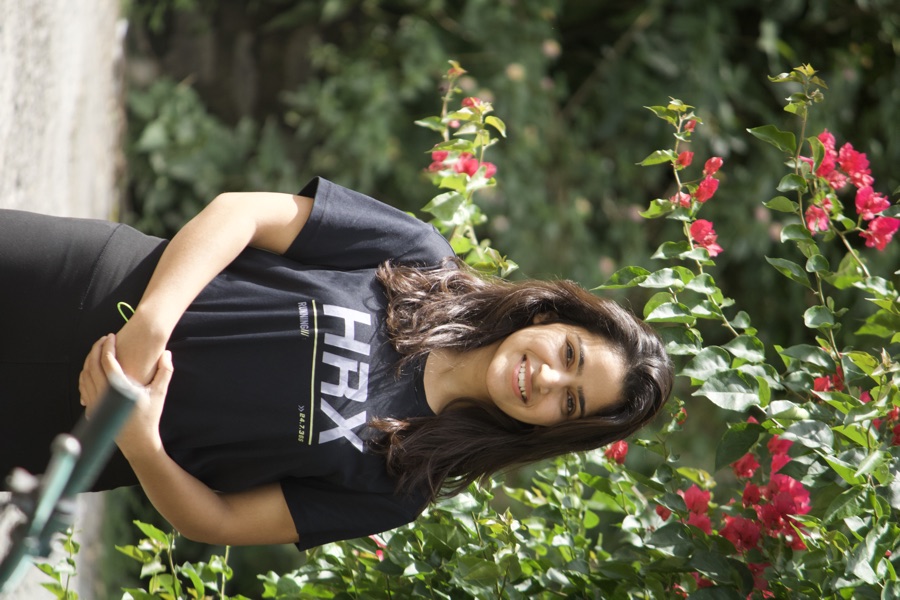
Portrait of Diksha Chamoli, the lead instructor

Your guide · Diksha Chamoli

Trained in the body's changes — before, during and after birth.

Diksha grew up in the hills of Uttarakhand, where yoga was never something you scheduled — it was simply how the day began. Long before it was a career, it was a family rhythm: breath before breakfast, elders who treated the practice as inheritance rather than exercise, a home where yogic philosophy shaped how you ate, rested and spoke to your body, not just how you moved it.

That upbringing is still the foundation of every class she teaches. Every session is taught with an understanding that a pregnant or postpartum body is not a modified version of a "normal" practice — it has its own logic, its own pace and its own wisdom, and it deserves to be met with the same patience she learned at home, long before she learned it in a studio.

  • Certified prenatal & postnatal yoga instructor
  • Trained alongside physiotherapists & doulas
  • Raised in Uttarakhand in a family rooted in yogic tradition
  • Personal pregnancy & postpartum experience
  • 9+ years teaching experience
  • Fluent in English & Hindi
  • Ongoing continuing education in perinatal anatomy
"My job isn't to help you achieve a pose. It's to help you feel safe, capable and cared for in a body that is doing something extraordinary."
Meet Diksha

See Diksha in action

Get a feel for her teaching style, before you join

Pregnancy-yoga guidance and practical tips, straight from class — through @sukhaprasava on Instagram.

Built for how India actually schedules, pays and messages.

Language, timing and payment shouldn't be the reason you skip a class.

अ

Language & scheduling

Classes in English and Hindi, live in IST.

  • Early-morning & evening slots, 5 AM–9 PM IST
  • Weekend sessions for working professionals
  • Time-zone conversion for NRIs
  • Recorded classes for irregular schedules
₹

Indian payments

Pay the way you already do — no friction at checkout.

  • UPI, cards, net banking & wallets
  • EMI available on the 1:1 private program
  • GST invoices & automatic receipts
  • International payments for overseas students
☏

WhatsApp support

The channel Indian students actually check.

  • Class reminders & meeting links
  • Payment confirmations
  • Instructor support hours
  • No confidential health details in open groups
Chat with us on WhatsApp →

From mothers practising with us

"I was terrified of doing the wrong pose in my third trimester. Every class started with 'skip this if it doesn't feel right' — that permission changed everything."

— Ananya, Bengaluru · Third trimester

"Six weeks after my C-section I didn't think I'd feel like myself again. The recovery track met me exactly where my body was."

— Priya, Pune · Postpartum

"Live classes at 6 AM before work, WhatsApp reminders so I never miss the link. It fits into a life, not the other way round."

— Meera, Delhi NCR · Second trimester

Plans

Simple, transparent pricing — no surprises at checkout.

Prices shown in Indian Rupees first, with a US Dollar rate alongside where applicable. Group pricing is tailored to your track — prenatal or postnatal.

Group · prenatal

Group - Prenatal

₹2,900 / month

  • 3 live group sessions / week
  • Trimester-based tracks
  • Recordings & WhatsApp support where included
Join Prenatal Group

Group · postnatal

Group - Postnatal

₹2,499 / month

  • 3 live group sessions / week
  • Postpartum-stage tracks
  • Recordings & WhatsApp support where included
Join Postnatal Group

NRI · single session

1:1 single session

$15 / session

  • One private session, no monthly commitment
  • Fully customised to your trimester or stage
  • Flexible scheduling across time zones
Book a Single Session

Self-paced

Recorded-only course

Message us for current fees

  • Pre-recorded videos by trimester/stage
  • Downloadable safety & routine guides
  • 1 group Q&A call per month
Start Self-Paced

New here?

Meet Diksha. Experience a class. Then decide.

The ₹199 demo fee is waived if you purchase a pack.

Try Your First Class — ₹199

INR is our primary display currency; USD is shown for international and NRI students, and your bank or card network sets the final conversion rate. No hidden fees, no countdown timers, no fake discounts — the price you see is the price you pay. All prices are for live online sessions unless you choose the Recorded-Only course.

Frequently asked questions

We recommend every participant consult their doctor or midwife before starting, and our screening form will flag conditions that require explicit clearance before enrolment.

Tell us your stage in the health questionnaire and we'll recommend a starting point — you can always move between tracks as your body changes.

Every live class is recorded and added to your on-demand library within a few hours, so you never lose a session you've paid for.

Single classes are non-refundable once attended. Multi-month plans can be paused or refunded pro-rata within the first 7 days — see our full Refund & Cancellation Policy.

No. Classes are supportive wellness practice. For diagnosis, treatment or complications, please see your doctor, physiotherapist or the specialist we refer you to.

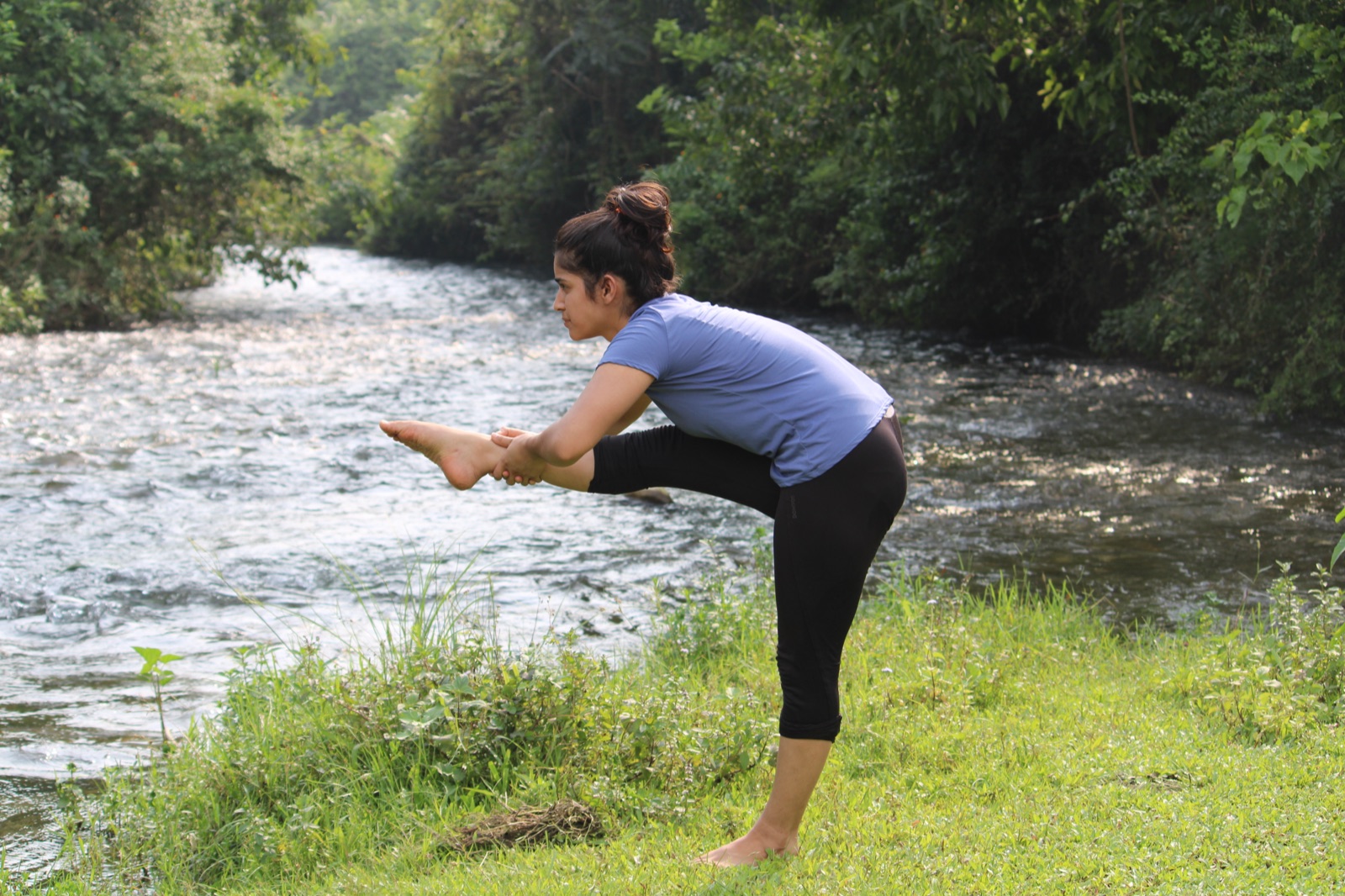
Practitioner stretching calmly by a quiet river

Ready when you are

Take the two-minute quiz, or just say hello.

We'll match you to a program, a teacher and a schedule — no pressure, no obligation.

Book a free consultation

Resources, grounded in real research

Practical answers on safety, breathing and recovery — each backed by cited sources, not guesswork.

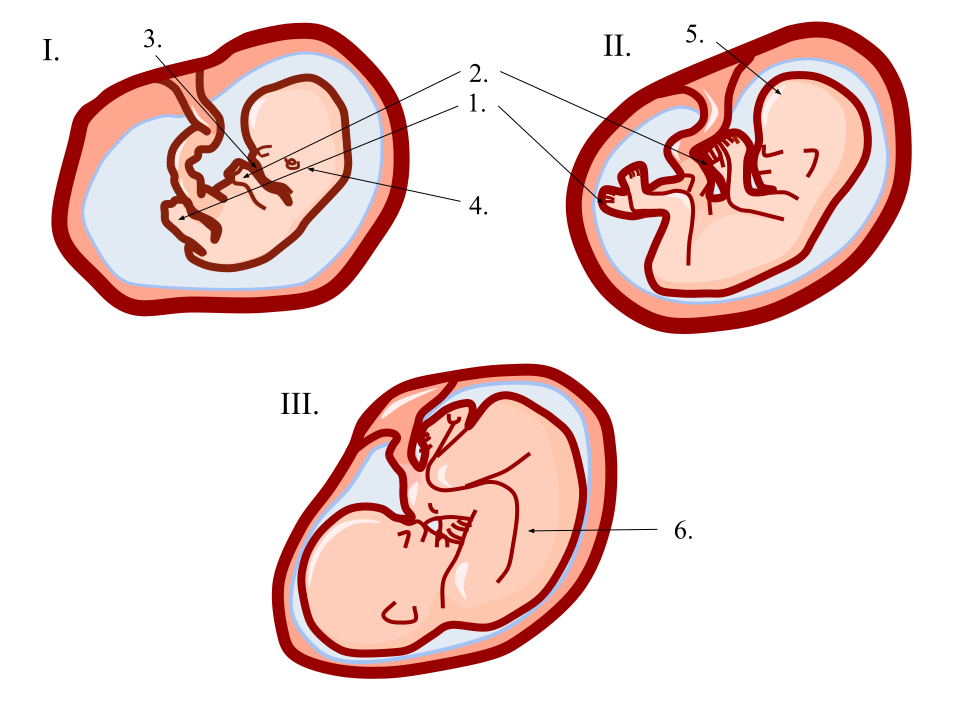
Diagram showing fetal development across the first, second and third trimesters

Safety · by trimester

Safe prenatal yoga: what the guidelines actually say

Official guidance is consistent on a few key points, and they shape how every class here is structured.

  • The NHS's general rule of thumb is the "talk test": you should be able to hold a conversation while exercising. If you become breathless talking, you're working too hard.
  • Avoid lying flat on your back for long periods, particularly after 16 weeks — the weight of the uterus can press on the vein returning blood to your heart and make you feel faint.
  • Avoid strenuous exercise in hot conditions (this is why hot yoga is not part of any program here), and stay hydrated.
  • Fatigue, breathlessness, dizziness or contractions are signals to stop and, if in doubt, check with your maternity team.
References

Image: Mhuerth01, Wikimedia Commons · CC BY-SA 4.0
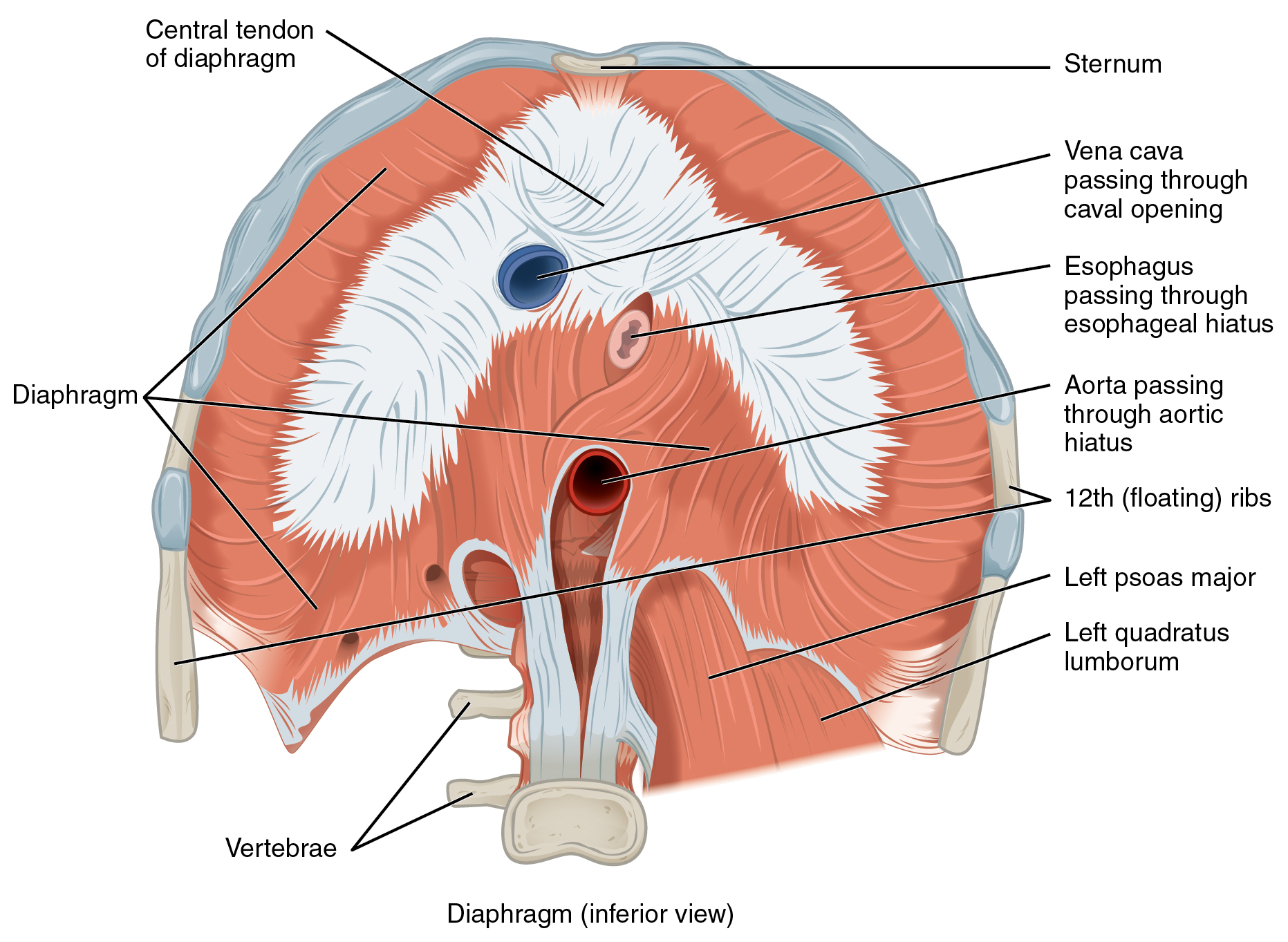
Anatomical diagram of the diaphragm, the primary muscle used in breathing

Labour preparation

Can breathing techniques really ease labour? What the evidence shows

Breathwork is a genuine, low-risk tool — but the research is more measured than most marketing suggests, and we'd rather tell you that plainly.

  • A controlled study of 36 labouring women compared Jacobson relaxation with Lamaze-style breathing, each practised for four weeks before birth. Self-reported pain (on a 0–10 scale) fell from 8.77 to 7.22 in the relaxation group, and from 8.94 to 7.55 in the breathing group — both statistically significant improvements.
  • In that study, Lamaze-style breathing performed slightly better than the relaxation technique, though both helped.
  • Evidence isn't unanimous: other trials have found breathing patterns during active labour made no significant difference to pain, anxiety or satisfaction scores.
  • Our honest framing: breathing techniques are a helpful, evidence-informed complement to discuss with your medical team — not a guaranteed replacement for pain relief options.
References

Image: OpenStax, Anatomy & Physiology · CC BY 4.0

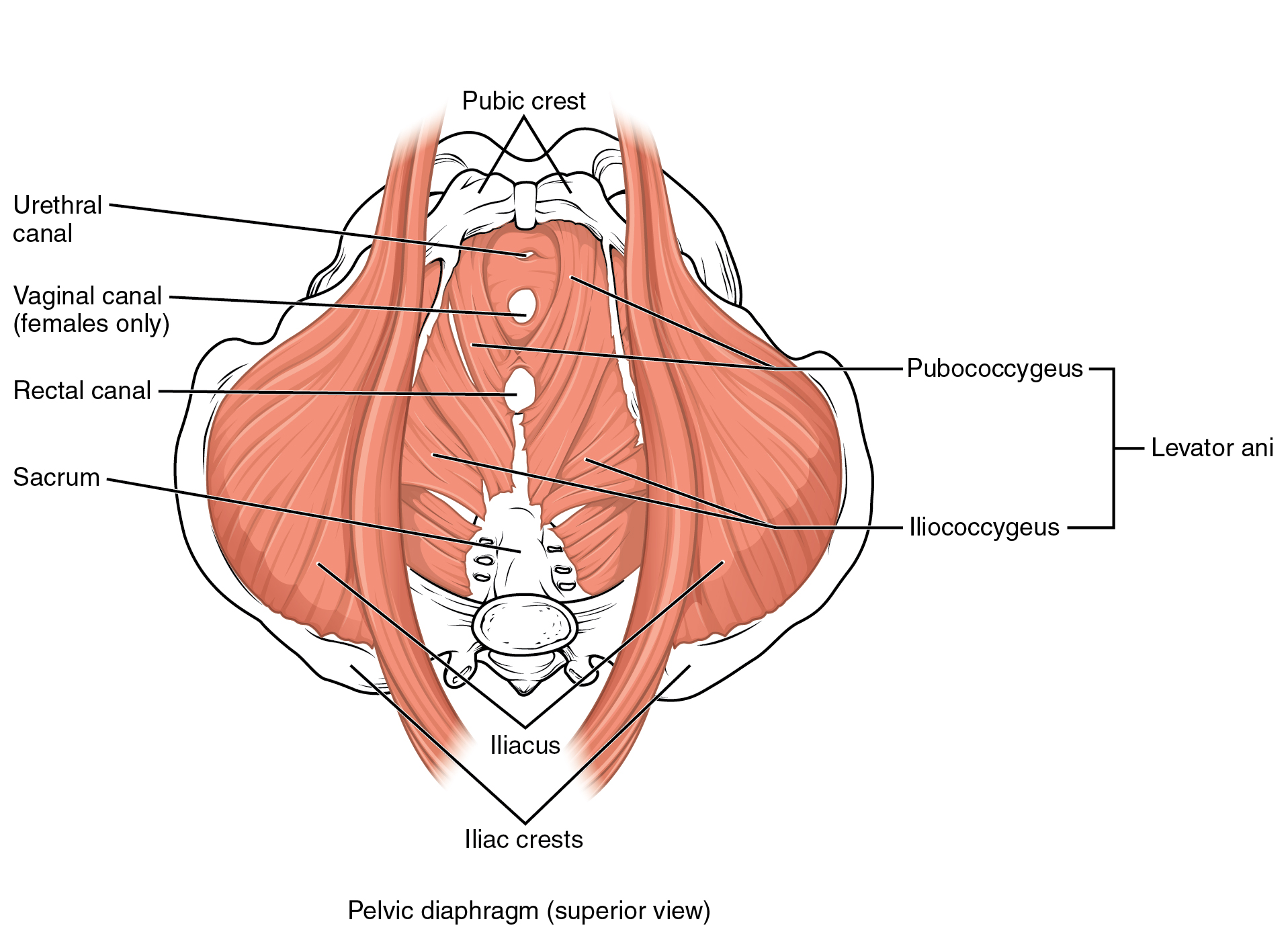
Anatomical diagram of the pelvic floor muscles

Postnatal recovery

Postnatal recovery: what the evidence says about pelvic floor & yoga

Recovery is a phased process — heal first, then strengthen, then load — and pelvic floor work is the foundation of it.

  • NHS technique: "squeeze and draw in your bottom as if you're holding in wind," squeezing around the vagina and bladder as if stopping the flow of urine — without pulling in your stomach or holding your breath.
  • NHS guidance suggests building up to 10 repeats of both long holds (up to 10 seconds) and quick squeezes, at least 3 times a day.
  • See your GP if you notice leaking, a heavy or bulging feeling between the vagina and anus, abdominal pain, or visible stomach-muscle separation still present 8 weeks after birth — these need a professional assessment, not just more yoga.
  • Broader postpartum activity guidance (ACOG) points to around 150 minutes of moderate activity a week once cleared — yoga can be part of that, phased alongside dedicated pelvic floor rehab.
References

Image: OpenStax, Anatomy & Physiology · CC BY 4.0

These resources summarise publicly available guidance and research for general information — they don't replace advice from your own doctor or midwife, and every program here is adapted to what's medically appropriate for you.

Chat on WhatsApp